CCC Certification & Lithium-Ion Cells

CCC Certification and Lithium-Ion Battery Capacity

If you’ve bought lithium-ion batteries before, you may have noticed that the printing and wraps on the cells don’t always look the same.

Two of the most important are CCC and the minimum capacity rating. Here’s what they mean, and why the wrap might not always match what you’re used to.

🔐 CCC Certification: Your Safety Checkpoint

CCC stands for China Compulsory Certification. Think of it as China’s version of the CE mark (Europe) or UL certification (U.S.).

For batteries, CCC certification proves that the cell has passed strict safety testing, including:

  • 🔥 Resistance to overheating and thermal failure

  • ⚡ Protection against overcharge and short circuits

  • 🧱 Durability against drops, impacts, and vibration

  • 🧪 Chemical stability to prevent leaks

To earn the CCC mark, manufacturers must test cells in accredited labs and pass regular factory audits. In simple terms: CCC is your safety checkpoint — it means the cell is safe, compliant, and built to perform as specified.

🔋 Capacity: What the Numbers Mean

Every cell lists its minimum capacity, shown in mAh (milliamp-hours) or Ah (amp-hours). This number tells you how much charge the battery can store.

In the past, companies often printed the typical capacity (the “average” value). But now, regulations require the minimum guaranteed capacity instead.

Example:

  • A 3200 mAh battery with ±6% tolerance

  • Old wrap: 3200 mAh (typical)

  • New wrap: 3000 mAh (minimum, CCC-compliant)

👉 What this means for you:

  • The printed number is the lowest capacity you can expect — most cells will actually test higher.

  • Real-world performance depends on factors like temperature, discharge rate, and usage.

  • For the most accurate specs, always check the manufacturer datasheet.

Don’t be alarmed if your cell looks different from older versions — wraps and print styles are updated to show it’s compliance with CCC.

For example:

  • Samsung cells no longer have room to print “Samsung” on the wrap — they now show SDI (Samsung SDI, the battery division).

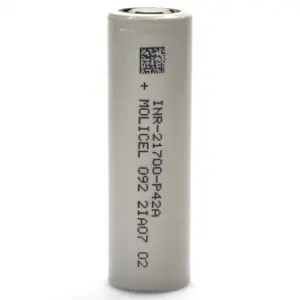
  • Molicel cells Have a lot more text squeezed on to the cell, changing the look significantly.

Different look, same genuine cell. The key is buying from a trusted supplier who provides authentic, certified batteries.

Summary

  • ✅ CCC certification = proof the cell has passed strict, independent safety testing.

  • 📏 Capacity ratings now show the minimum guaranteed storage, not the typical average.

  • 🎨 Wraps change — a new look doesn’t mean fake. (e.g., Samsung → SDI).

  • 📄 Always check the manufacturer datasheet for detailed performance data.

  • 🔋 Stick with reputable suppliers — the label alone isn’t enough.

😕 Different wrap, same cell.

Molicel P42A
A post-CCC-manufactured Molicel P42A. The text on the wrap has been adjusted to comply with the CCC regulations. However, this cell's 'Typical Capacity' is 4200mAh; the minimum, as per CCC requirements, is 4000mAh.
This is another genuine Molicel P42A cell: This was one manufactured before CCC compliance was required.